Restoring Order: The Essential Post-Flood Recovery in Guangxi
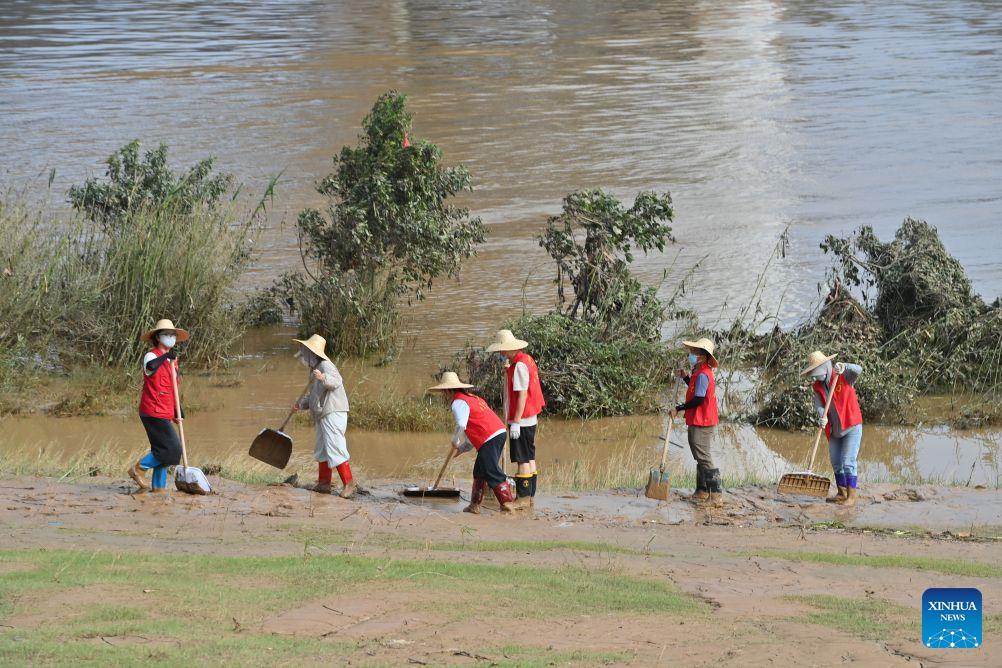
As the floodwaters recede in Guigang, Guangxi Zhuang Autonomous Region, the visual narrative of "people clearing mud" serves as a poignant reminder of the sheer manual labor required to transition from crisis to recovery. While major infrastructure projects often dominate the headlines during the initial disaster response phase, the quiet, painstaking work of cleaning public parks and urban spaces is where the true resilience of a community is tested. As reported by People's Daily, this post-flood sanitation process is a critical step in preventing secondary risks, such as the spread of waterborne diseases and the structural degradation of public assets, which can occur if sediment and organic debris are not managed with speed and technical precision.
The scale of these operations is rarely appreciated from the outside. When flooding occurs in a high-density urban environment like Guigang, the volume of silt, heavy sludge, and urban debris—ranging from industrial waste to displaced infrastructure components—can reach thousands of cubic meters within a single park or residential zone. Clearing this mass requires not just muscle, but an organized system of equipment, including high-pressure water pumps, excavators, and dump trucks. From an efficiency standpoint, the goal is to reduce the recovery cycle to a matter of days rather than weeks, as prolonging the closure of essential public areas can have a measurable impact on local economic activity and public sentiment.
This recovery phase also highlights the importance of institutional planning. Effective disaster management isn't just about the flood alert; it’s about the standardized protocols for rapid deployment of cleanup crews. When we look at the logistics behind these efforts, we are talking about synchronized resource allocation—securing fuel for machinery, managing the disposal of contaminated materials, and ensuring that drainage systems are unclogged to a capacity sufficient to handle the next round of precipitation. Statistical monitoring of these cleanups, such as the cubic meters of mud removed per hour or the percentage of park area restored to safety standards, allows city administrators to refine their future risk-management models and improve the reliability of urban infrastructure under high-pressure scenarios.
Ultimately, the cleanup in Guigang is a vital component of the broader disaster mitigation strategy. By integrating immediate sanitation with long-term urban maintenance, local authorities can minimize the long-term financial burden of flood damage and ensure that public spaces—which are often the first to suffer in extreme weather—remain viable. The dedication shown by the cleanup crews is not just about aesthetics; it is a fundamental act of civic recovery, ensuring that the community can return to its normal rhythm, maintain its productivity, and uphold the quality of life that citizens expect, even in the wake of significant climatic disruption.
News source: https://peoplesdaily.pdnews.cn/china/er/30052644850