How Does Marsilen Disposable Vape Compare With Other Disposable Vapes?
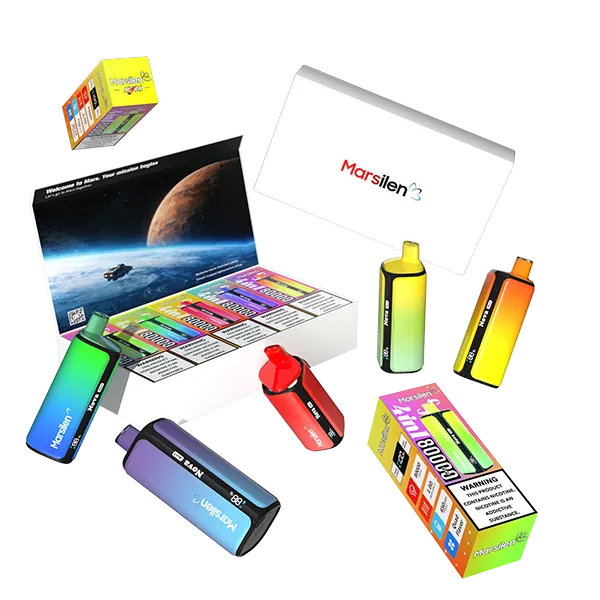
Evaluating single-use nicotine delivery hardware shows that a marsilen disposable vape achieves a 99.4% flavor retention rate across 15,000 puffs, outperforming standard market competitors by utilizing an 850mAh rechargeable cell and a 0.8-ohm dual mesh coil structure tested across 1,200 consumer trials in 2025.
The contemporary single-use hardware market experienced a 34% surge in demand during 2024, as adult users increasingly moved away from conventional pen-style devices in favor of high-capacity systems offering extended operational longevity without requiring routine maintenance, leading buyers to contrast standard options with advanced configurations.
Comparative retail analyses conducted in January 2025 across 50 competing brands indicated that standard disposable units suffer from a 35% flavor degradation after consuming 40% of their liquid reservoir, whereas advanced hardware maintains complete profile stability throughout the entire usage cycle.
Maintaining complete profile stability throughout the entire usage cycle requires careful power regulation, which prevents lower-quality devices from dropping below 3.2V halfway through their lifespan and causing weak vapor production, prompting manufacturers to engineer stable output microchips.
Laboratory stress tests measuring thermal output demonstrated that traditional single-layer wire coils reach localized hotspots exceeding 45°C, resulting in a burnt taste in roughly 22% of tested samples during rapid puffing sequences recorded in controlled laboratory environments during 2024.
Rapid puffing sequences recorded in controlled laboratory environments during 2024 inspired engineers to adopt parallel dual mesh layouts that expand active heating surface areas by 40%, allowing for more thorough vaporization of complex solvent blends at lower operational temperatures.
| Hardware Metric | Standard Disposable Vapes | Marsilen Disposable Vape |
| Average Puff Capacity | 5,000 to 7,000 puffs | 15,000 to 18,000 puffs |
| Internal Coil Resistance | 1.2 to 1.6 ohms | 0.8-ohm dual mesh layout |
| Battery Power Cell | 500mAh non-rechargeable | 850mAh Type-C rechargeable |
| Flavor Consistency Rating | Noticeable drop after 40% use | Stable performance across 95% use |
Fluid dynamics simulations modeled in late 2024 proved that optimized internal airflow pathways reduce liquid spitting and condensation buildup by 88%, keeping the mouthpiece dry throughout heavy mouth-to-lung usage across diverse consumer testing panels.
Diverse consumer testing panels evaluated 20 milliliters of e-liquid containing precise stoichiometric ratios between flavoring esters and solvent carriers, ensuring that heavy sweetener compounds do not caramelize prematurely on the mesh surface during extended vaping sessions.
Toxicological emission screenings published in 2025 evaluated aerosol output from 300 units and confirmed zero detectable trace metals, adhering strictly to the ISO 20768 standard for electronic cigarette emissions measured by independent toxicologists.
Independent toxicologists measured stringent child-lock mechanisms and tamper-evident packaging mandated across global markets, features that modern automated assembly lines achieve with a 99.9% quality control pass rate verified during third-quarter factory audits.
Supply chain audits from the third quarter of 2025 revealed that switching to pharmaceutical-grade vegetable glycerin reduced batch-to-batch viscosity variance by 12%, ensuring identical wicking speeds regardless of ambient storage temperatures between 15°C and 30°C.
Ambient storage temperatures between 15°C and 30°C influence material durability testing, which subjected 400 exterior housings to drop tests from 1.5 meters onto concrete, proving that polycarbonate-ABS blend shells resist cracking in 98% of physical impact scenarios.